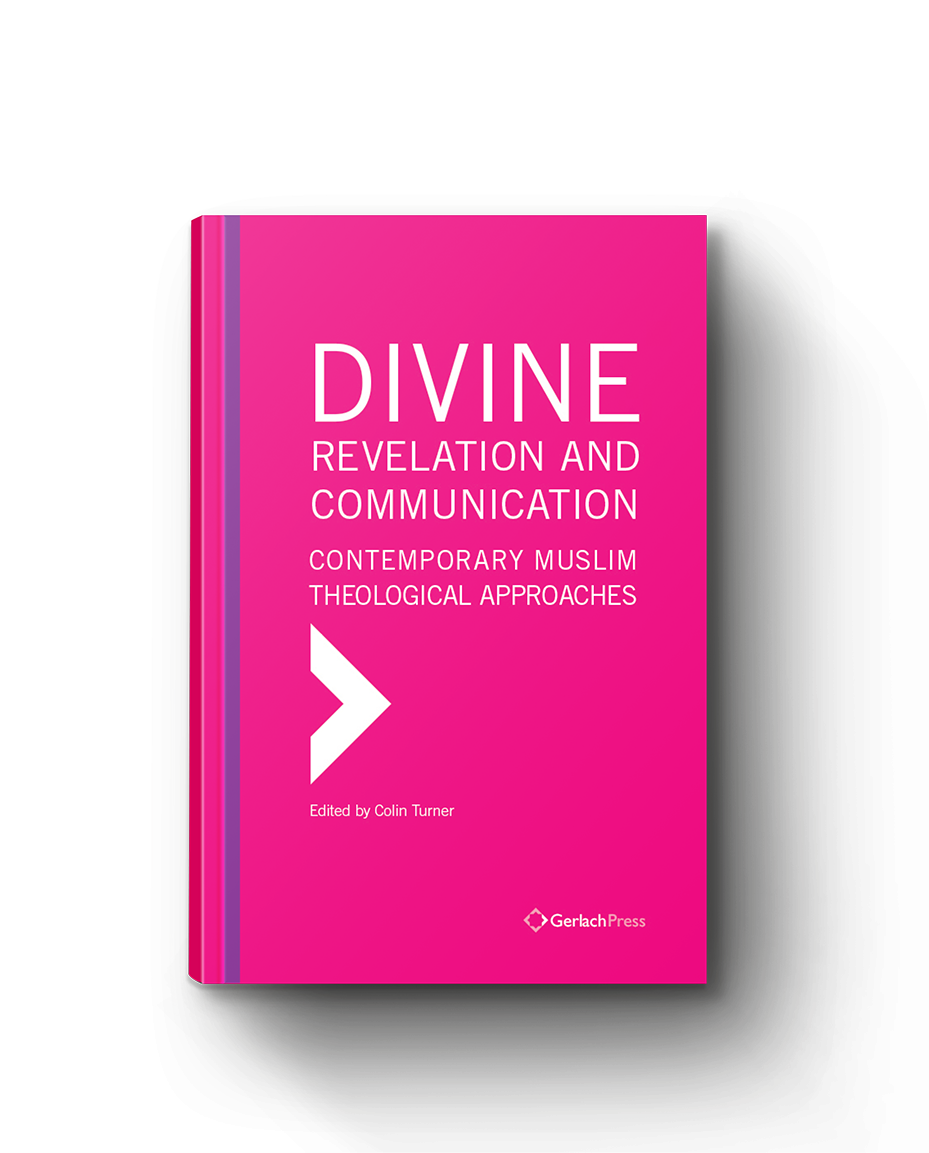
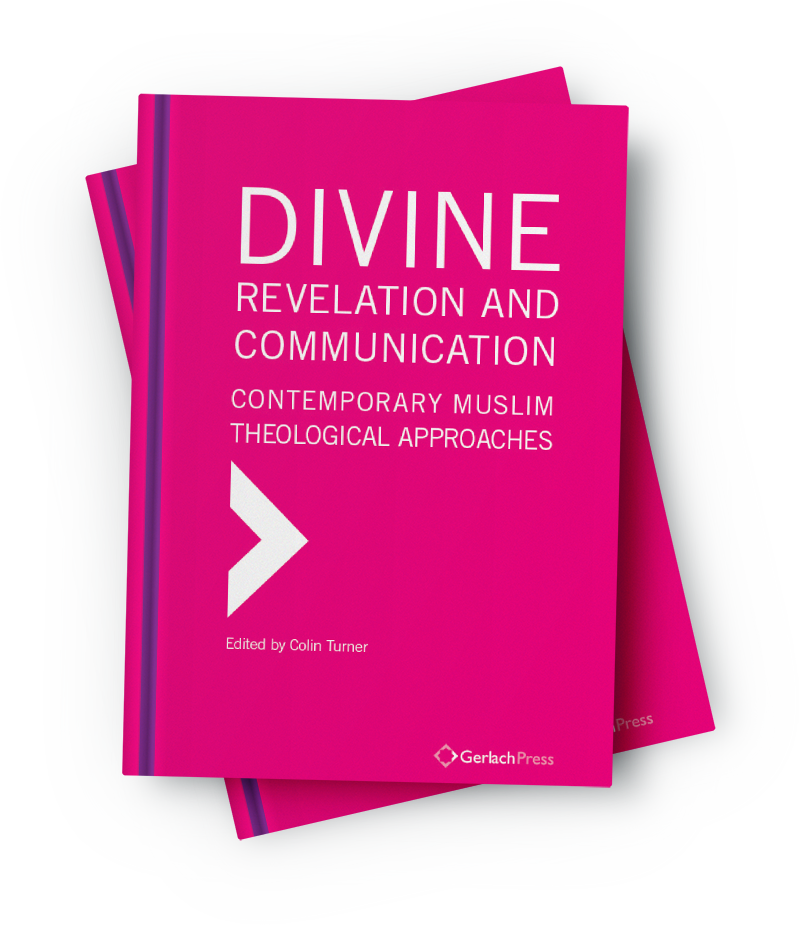
Divine Revelation and Communication
Contemporary Muslim Theological Approaches
In an age where God is often sidelined in both public and personal spheres, Divine Revelation and Communication invites readers to re-centre the Divine in Muslim thought and life.
Why Read This Book?
Why read Divine Revelation and Communication: Contemporary Muslim Theological Approaches?
In an age where God is often sidelined in both public and personal spheres, Divine Revelation and Communication invites readers to re-centre the Divine in Muslim thought and life. This timely and eternally topical volume – commissioned by the International Foundation for Muslim Theology (IFMT) – is not just another academic book; it is a call to revive “God-talk” as a living, accessible and spiritually rooted practice.
Why read this book? Because it tackles one of the most foundational yet neglected questions of our time: How does God speak to us, and how do we speak of and to Him…

Contents by Chapter
This section explores the multifaceted nature of divine communication in Islamic theology, offering diverse perspectives on revelation, natural theology, supplication and metaphysics.
- Divine Metaphysics in Mullā Ṣadrā: God and His Speech
Farhan A. Zaidi
An exploration of Mullā Ṣadrā’s metaphysics of divine speech within his broader cosmological framework. - Qur’anic Framework for Waḥy as Revelation: Four Levels of God’s Communication with His Creation
Mehmet Ozalp
An analytical model outlining four distinct levels of divine communication as presented in the Qur’an. - A Religiously Interesting Natural Theology
Jamie Turner
A fresh proposal for a natural theology that is both theologically significant and religiously meaningful. - Reclaiming Space for God-Talk: Theories of Ijtihād and Intra-Muslim Differences in Matters of Belief
Ali-Reza Bhojani
Exploring theological pluralism and the role of ijtihād in sustaining meaningful God-talk within Islam. - Frontier Theology, God and a Glut-Theoretic Account of the Problem of Foreknowledge in Islamic Theology
Safaruk Zaman Chowdhury
A bold engagement with the problem of divine foreknowledge using contemporary logical tools. - Supplication as Divine Communication in the Qur’an
Seyfeddin Kara
Examining duʿā’ as a mode of reciprocal communication between God and creation.
This section explores the multifaceted nature of divine communication in Islamic theology, offering diverse perspectives on revelation, natural theology, supplication and metaphysics.
- An Analysis of the Qur’anic Presentation of Angels
Mahshid Turner
A thematic overview of how angels are portrayed in the Qur’an and their theological significance. - In Search of a Nursian Angelology
Colin Turner
A study of angelology in the theology of Said Nursi, uncovering its cosmological and spiritual depth.
These chapters reflect on the nature, function, and legacy of prophethood in relation to spiritual care, epistemology and pastoral theology, all of which are foundational ‘God-talk’ concerns.
- A Muslim Pastoral Theology: “God Did Not Send a Prophet but Shepherded Sheep”
Bilal Ansari
Drawing on prophetic imagery to lay the groundwork for a Muslim pastoral theology rooted in humility and care. - Prophetology and Islamic Spiritual Care: The Spiritual Teachings of the Prophet Muhammad as a Model for Spiritual Formation and Caring for Souls
Feryal Salem
Examining the Prophet’s teachings as a paradigm for spiritual growth and soul care. - An Epistemic Justification for Establishing Proofs in Argumentation: A Critical Analysis of Prophetic Discourse as a Manifestation of God-Talk
Ismail Latif Hacinebioglu
A philosophical defence of prophetic discourse as a rational and epistemically grounded mode of divine communication.
About the Editor
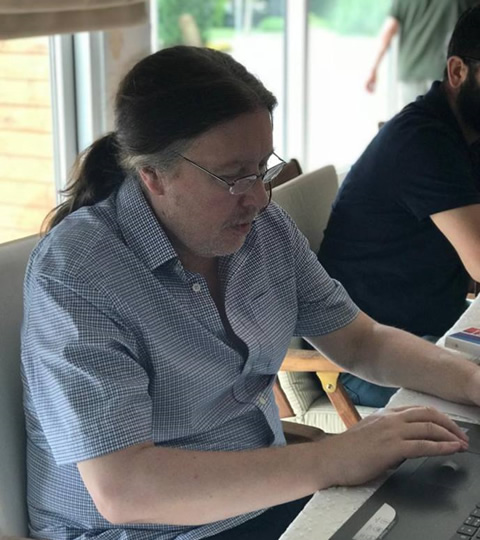
Dr Colin Turner is a freelance writer and researcher with over thirty years of experience as a university lecturer. He is co-founder of the IFMT and its Head of Academic Research. His most recent post was that of Reader in Islamic Thought at Durham University. While Dr Turner’s doctoral research was on state-clergy relations in Safavid Iran, his broader research interests include Muslim theology and philosophy, anthropology of religion, Quranic studies and the life and works of Bediuzzaman Said Nursi.
Among his publications are:
- Islam: The Basics (Routledge, 2005)
- Said Nursi (OUP, 2009)
- The Quran Revealed: A Critical Analysis of Said Nursi’s Epistles of Light (Gerlach Press, 2013)
- ‘Creation as Text: the Graphological Trope in Said Nursi’s Risale-i Nur’ in The Journal of Qur’anic Studies (Edinburgh University Press, 2020)
About the International Foundation for Muslim Theology (IFMT)
Founded in 2018, the IFMT emerged from a growing concern that discussions about God – the Creator-created relationship – are increasingly absent in both Muslim public discourse and academic spaces. While topics such as God’s laws and Quranic injunctions are widely debated, the foundational question of Divine presence in daily life is often sidelined. This neglect is particularly troubling given the centrality of the Divine in Islamic cosmology, spirituality and ethics.
Originally, our ambition was to “revive Islamic theology,” but it quickly became clear that this phrase was both too broad and too ambiguous. “Islamic theology” is a contested term: what do we mean by it? Is it systematic or speculative? Sacred or academic? More importantly, the very term “Islamic” risks essentialising a diverse and pluralistic tradition of Muslim theological thought.
Thus, rather than attempting to force theology into a rigid academic box, we reoriented our efforts toward promoting what we now call “God-talk” – a more dynamic, accessible and spiritually grounded form of theological reflection. This shift was guided by focus group conversations across a spectrum of Muslim voices, from academics and educators to grassroots believers.